Ready to Change Lives? Your Complete Guide to EFT Tapping Training and Certification

If you’re reading this, you’ve probably already felt the magic of EFT Tapping. Maybe it helped you finally quiet that buzzing anxiety in your chest, or maybe you saw a friend use it to ditch a lifelong fear of spiders (yes, really!).
Now, you’re thinking bigger. You’re thinking: I want to do that for others.
You’re not just looking for a course; you’re searching for a path. A way to take this simple, powerful tool and use it to truly help people heal, grow, and feel safe in their own skin.
I’m Tash Alexander, and I’ve been right where you are. I’ve seen Tapping transform my own life and the lives of countless clients. Now, as an EFT International Trainer, my passion is helping people like you become confident, credible, and compassionate EFT practitioners.
The internet is full of courses, and it can be confusing. That’s why I’ve put together this complete guide. We’re going to walk through the main questions people ask Google every day when they’re ready to start their EFT Tapping certification journey.
Let’s get you started!
⭐ Featured Snippet: Quick Answer
How do I start my EFT Tapping training and become a certified practitioner?
To become a certified EFT Tapping practitioner, you should enrol in an Accredited EFT practitioner training program, typically offered by a recognized body like EFT International (EFTi). The journey involves three main steps: completing EFT Tapping Level 1 training and Level 2 course, undergoing supervision/mentoring, and passing a final exam. This ensures you receive comprehensive, ethical, and evidence-based Clinical EFT training.
Section 1: The Call to Tap – Why This Path?
I often joke that Tapping is the world’s best-kept secret, but the secret is getting out! More and more people are searching for EFT Tapping training because they are tired of quick fixes and want a tool that works with the body, not against it.
My "Aha!" Moment (and a little humour)
I remember one of my first clients, a lovely man named Mark. He came to me because he had a crippling fear of public speaking. He was a brilliant engineer, but the thought of giving a presentation made his stomach feel like a washing machine full of rocks.
We did a few rounds of Tapping. He focused on the feeling, and we tapped through the points. After about ten minutes, he stopped, looked at me, and said, "Tash, I feel… weirdly calm. It’s like someone turned the volume down on my panic button."
Then he paused, looked down at his shirt, and said, "Wait, did I just pay you to poke myself in the face?"
We both laughed! But that’s the beauty of it. It looks simple, maybe even a little silly, but the results are profound. That’s the moment I knew I had to teach this. If you’ve had a similar moment—a feeling that this is too good not to share—then you are ready to learn how to become an EFT practitioner.
Section 2: Your Training Roadmap – The Three Levels
When people search for EFT Tapping training, they often see terms like "Level 1," "Level 2," and "Master." Think of it like learning to drive: you start with the basics, then you get your license, and then you become a professional driver.
1. EFT Tapping Level 1 Training: The Foundation
This is where everyone starts. EFT Tapping Level 1 training is all about you.
•What you learn: The basic Tapping points, the foundational script, and how to use Tapping safely and effectively for yourself.
•The Goal: To become proficient in using Tapping for your own stress, anxiety, and everyday emotional ups and downs. This is your self-help toolkit.
•Why it matters: You can’t pour from an empty cup. To be a great practitioner, you must first be grounded and calm. Level 1 gives you that personal mastery.
2. EFT Tapping Level 2 Course: The Practitioner Path
This is the game-changer. The EFT Tapping Level 2 course is where you learn how to work with others.
•What you learn: Advanced techniques, how to find the "core issues" (the root of the problem), how to handle strong emotions safely, and the ethics of working with clients.
•The Goal: To move from using Tapping on yourself to skilfully guiding another person through their emotional landscape. You learn the art of asking the right questions.
•The Difference: Level 1 is about what to tap. Level 2 is about when and how to tap with another person. It’s where the real magic of being a practitioner begins.
3. EFT Tapping Level 3: Advanced Practitioner (The Deep Dive)
While Level 2 allows you to practice, Level 3 is for those who want to master the craft.
•What you learn: Highly specialised techniques, working with complex trauma, advanced language patterns, and how to integrate Tapping into a full-time practice.
•The Goal: To become an expert in the field, capable of handling almost any client issue with confidence and grace.
Section 3: Certification and Credibility – The Gold Standard
This is the most important section for anyone searching for EFT Tapping certification or Accredited EFT practitioner training.
The truth is, anyone can create an "EFT course" and give you a certificate. But if you want to be taken seriously by clients, other therapists, and the scientific community, you need accreditation.
Why Accreditation Matters (It’s Not Just a Fancy Piece of Paper)
Accreditation means your training has been vetted by a globally recognized, independent body. It ensures:
1.Safety and Ethics: You know how to work safely and ethically with clients, especially when dealing with trauma.
2.Competency: You have met a high standard of skill and knowledge.
3.Credibility: You can confidently tell a client, "My training is recognized worldwide."
The gold standard in the field is EFT International (EFTi). When you train with an EFTi-accredited trainer (like me!), you are following a rigorous, standardized curriculum that is respected globally.
Your Certification Checklist:
To achieve full EFT Tapping certification with EFTi, you typically need to complete:
•Level 1 & 2 Training: The core workshops.
•Personal Tapping Sessions: Experience Tapping as a client (usually 6-12 hours).
•Case Studies: Document your work with practice clients.
•Supervision/Mentoring: Work with an experienced practitioner to refine your skills.
•Final Exam: A written test to confirm your knowledge.
This process ensures you are not just a tapper, but a skilled, ## Section 4: Where to Learn – The Power of the Live Online Course
When people search for EFT Tapping training, they often wonder if they need to find a course "EFT Tapping training near me" to get that deep, connected learning experience. I get it! For years, I was a dedicated in-person workshop facilitator. I loved the energy of a room full of people.
But the world has changed, and honestly, so has the quality of online learning. I can tell you that a live, interactive Online EFT Tapping course is not just a good alternative—it’s often the better choice.
Here’s why I’ve embraced the virtual classroom, and why my students love it:
•No Travel, No Stress: Forget the cost of flights, hotels, and the stress of navigating a new city. You can get your Accredited EFT practitioner training from the comfort of your own home, in your pyjamas if you want! This means you start the training already feeling grounded and safe.
•Access to the Best: Before online training, you were limited to the trainers in your local area. Now, you can train with a world-class EFT International Trainer like me, no matter if you live in Sydney, London, or a small town in the US. The world is your classroom.
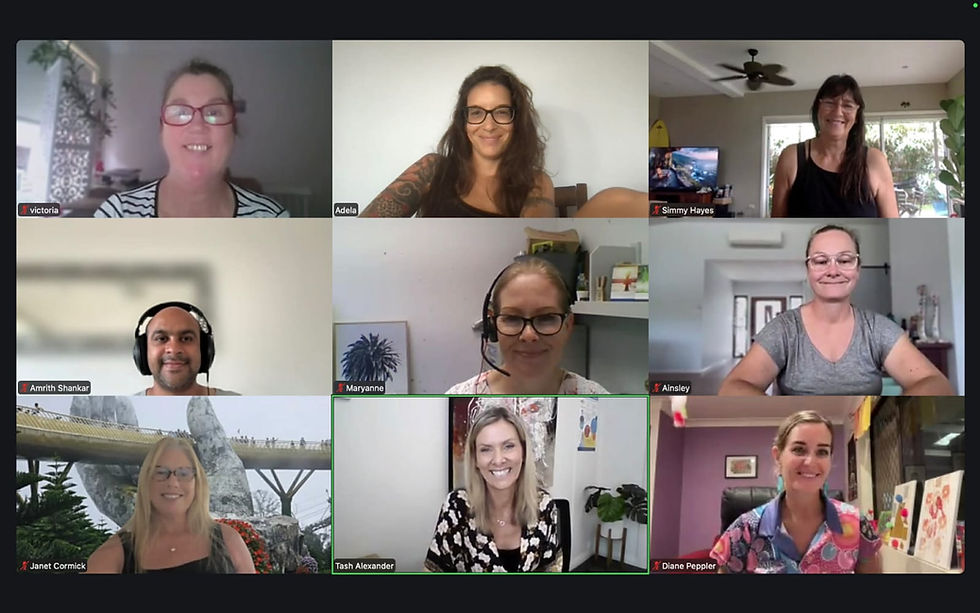
•Deep Connection, Virtually: This is the big one. Many people worry about losing the "hands-on" feel. My live online courses are specifically designed to be small-group, highly interactive sessions. We use breakout rooms for practice, and I can watch you tap and give you real-time feedback just as easily as if you were sitting across the table from me. In fact, sometimes it’s easier because you’re in a private, safe space.
•Immediate Integration: You learn a technique, and then you can immediately use it in your real-life environment. You don't have to wait until you get home to try it out. The learning is instantly integrated into your life.
The key is the word "live." Avoid pre-recorded, self-paced courses if you want to become a certified practitioner. Look for a trainer who is actively present and facilitating the learning, just like a great in-person workshop. That’s how you get the deep, connected learning experience you’re looking for.
Once you have your core EFT Tapping certification, you might feel drawn to a specific area. This is where the searches for Clinical EFT training and EFT Tapping for trauma training come in.
What is Clinical EFT Training?
The term Clinical EFT training refers to the application of Tapping that is grounded in scientific research and used in therapeutic settings. It’s about moving beyond self-help and using Tapping to address serious issues like PTSD, chronic pain, and severe anxiety.
If you are a therapist, counsellor, or health professional, this is the path for you. It focuses on the evidence base (the science that proves Tapping works) and the structured protocols used in clinical trials.
EFT Tapping for Trauma Training
Working with trauma is a sacred and serious responsibility. It requires specialized skills that go beyond the basic Tapping script.
•The Danger: If you don't have proper EFT Tapping for trauma training, you can accidentally re-traumatize a client or cause an emotional overwhelm.
•The Solution: Specialized courses teach you gentle, safe techniques like the "Tearless Trauma Technique" and how to "borrow benefits" so the client can heal without having to relive the painful memory.
If you feel called to help people with deep emotional wounds, make sure your trainer has specific, advanced training in this area. It’s not just about being a good tapper; it’s about being a safe, ethical, and highly skilled guide.
Section 6: A Final Story – The Power of the Practitioner
I want to leave you with a story about Sarah, who was one of my students in a recent Accredited EFT practitioner training.
Sarah was a nurse who was completely burned out. She loved helping people, but the stress of her job had left her feeling empty and cynical. She signed up for the training not to quit nursing, but to find a better way to cope.
During her Level 2 training, she was practicing with a fellow student who was struggling with a feeling of being "not good enough." Sarah, using the techniques she had just learned, gently guided her partner to the root of the feeling—a memory from childhood where a teacher had criticized her artwork.
It was a small memory, but it had been running her life for decades.
As they tapped, the student burst into tears, then laughed, and finally felt a huge wave of relief.
Sarah came to me afterwards, her eyes shining. "Tash," she said, "I've given people medicine for years, and it helps. But I've never seen a change happen so fast, so completely, just by talking and tapping. I feel like I've finally found the real way to heal."
Sarah didn't quit nursing. Instead, she started using Tapping with her colleagues to help them manage stress. She became a beacon of calm in a chaotic hospital.
That’s the power of becoming a certified EFT practitioner. You don't just learn a technique; you learn how to be a catalyst for profound, lasting change.
If you’re ready to stop searching and start training, I invite you to explore The Tapping Room’s Accredited EFT practitioner training programs. We offer the gold standard in Clinical EFT training and would be honoured to guide you on this incredible journey.
Click here to see when the next workshop is:



Comments